Showing posts with label Guest Post. Show all posts

on
LEAVE A COMMENT!

Teens And Cars: 5 Frugal Tips From A Motor City Auto Critic And Car-Toonist

Teens And Cars: 5 Frugal Tips From A Motor City Auto Critic And Car-Toonist

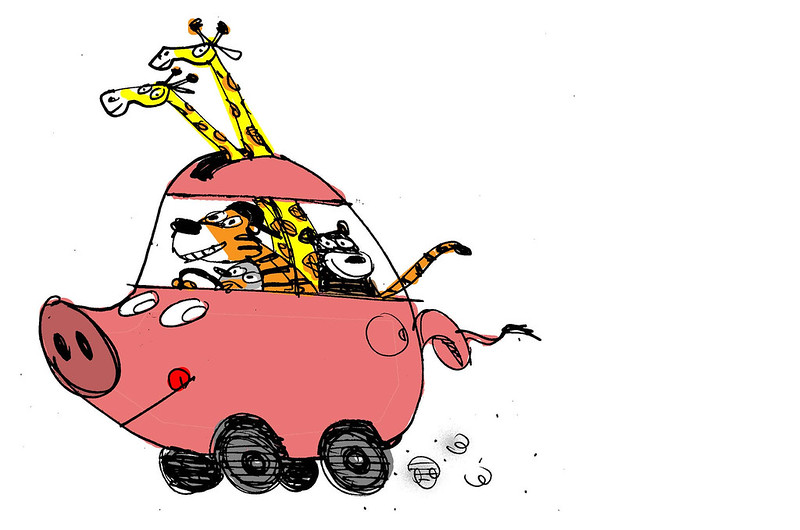
Henry Payne knows a thing or two about cars. He’s the auto critic for the Motor City’s Detroit News and an amateur race car driver. He also knows a thing or two about teens. He raised two of them. You might also recognize Henry as the artist behind FamZoo’s iconic tiger. So who better to ask for advice when it comes to cars, teens, and money?

Here’s what Henry has to say when it comes to helping your teens keep their car habits on track financially.

Like this? Please share it!

on
LEAVE A COMMENT!

Tips for Teaching Teens Responsible Credit Card Use

Guest Blogger Alanna Ritchie with Credit Card Tips for TeensThis is a guest post by Alanna Ritchie. Alanna is a content writer for Debt.org, where she writes about personal finance and little smart ways to spend (and save) money. Alanna has an English degree from Rollins College.


Around 70 percent of college students have credit cards, and some of these kids begin their adult years of credit spending unsupervised and unprepared. The consequences can be devastating, as independence is then shrouded in a dark cloud of debt.

Instead of waiting until kids are out of the house, some parents choose to take advantage of the years where teens are developing spending habits by overseeing their credit education. Teens can either be an authorized user on a parent’s account — which can be closely monitored — or, if they have verifiable income, they can apply for their own cards.

Here are some steps to teach teens the proper use of credit as a tool:

  1. Explain the fine print. As you introduce them to how credit cards work, make sure to include explanations about fees and interest rates. Understanding the ins and outs of interest rates and how these may change based on activity is critical.
  2. Make a budget. Before getting the card, make sure that you both know what the money will be spent on and where the payments will come from. Then, when you get the bill, you can compare your goals with execution and adjust the plan for the next month if necessary. Track spending throughout the month, so that the bill doesn’t come as a surprise.
  3. Teen Monkey With Credit CardDiscuss minimum payments. Make sure they understand the difference between the minimum payment and paying off the full balance every month.
  4. Review the monthly bill together. Walking alongside your teen in this process will take more than a few conversations. After the first few bills come in the mail, it’s time to sit down together again. Together you and your teen can examine what is owed and how the money is being spent.
  5. Have them pay it off every month. After you finish discussing the bill, it’s time to make payments. Instead of making only the minimum payment, teach teens to pay off the whole balance every month. Getting teens in the habit of doing this while they don’t have to carry the weight of expenses like rent, food and other bills, will prepare them to make the same choices in the future.
  6. Keep balances below 25 percent of credit limit. Paying off the balance isn’t the only precaution your teen should take. Teach them how to maintain a good credit score by helping them understand credit utilization. If they have a credit limit of $500, for example, they should only use $125 of it each month.
  7. Don’t rush into bailing them out. Instead of coming to the rescue when teens make impulse buys and accidentally overspend, discuss realistic options so that they can take care of their debts. This may mean working more hours at their jobs, holding back on spending until the balance is paid off, or — if your child demonstrates that they’re truly not ready to carry this responsibility — cutting the card up. (Too soon for a credit card? Consider a FamZoo prepaid card as safe, educational warm-up.)

Giving your teen the chance to manage their finances within the safety net of your household can be a valuable opportunity. The truth is that one day Mom and Dad’s rules will no longer matter. Credit card agreements will be the new set of rules, and it will be time for young adults to set some good rules for themselves.


This was a guest post by Alanna Ritchie.

Like this? Please share it!

on
LEAVE A COMMENT!

Teach Your Kids Money Management with Check Templates

Giraffe With CubGuest Blogger Annie HarringtonThis is a guest post by Annie Harrington, a small business owner and freelance writer who is also keenly interested in all aspects of finance and design, including how to personalize checks.


I grew up watching my parents write personal checks at the store, and balancing their checkbooks every weekend at the kitchen table. The day I got my first checkbook was one of those rare “rite of passage” moments that made me feel a little more like an adult, but one thing I quickly realized was that I didn’t really understand how to manage my money properly or balance a checkbook, because I never learned and I was never taught. As a result of that experience I want to do all that I can to give my children the tools they need to succeed.

As parents we know that our kids have a lot to learn before they’re ready to venture out on their own, and it’s our responsibility to teach them those life lessons so they can be successful. One of the best lessons we can teach our kids before they get too old is how to manage their money properly. It’s a life lesson that can take a little bit of time for kids to grasp, so starting early is the best way to ensure they fully understand it before they’re out on their own.

Although there are many ways we can teach our kids money management one of my favorite methods is with “fake” check templates — click here or here for an example — because they allow for a hands on, tangible approach to money management that teaches more than just fake cash or piggy banks.

FamZoo Mock Check

With a check template you’re able to teach your children all aspects of the check writing process. From filling out the appropriate “pay to the order of” information, to including the date, a memo, and a signature on the bottom, check templates allow you to go beyond the typical money management lesson by giving you the ability to break down each portion into a mini-lesson of its own. For example you can discuss the value of good handwriting and give your kids a fun way to practice. Another lesson you could teach is dollars and cents, how to calculate simple math in the head, and the importance of dates.

Not only can you teach these mini lessons but you can attach them to the overall goal of money management. By giving your kids a set of play checks you’re able to then pay them “play dollars”, for completing chores and other tasks, which they can stash in their piggy bank or deposit in their IOU account at a virtual family bank like FamZoo. Once they have enough play dollars saved up they’ll have the option to use their checkbook to buy rewards like extra TV time, new toys, or anything else you might decide.

Play checks are a fun exercise that gives you the ability to incorporate lessons for account monitoring, as well as checkbook balancing, so you can cover all the bases of money management at once. Unlike other lessons, this one can continue for days, weeks, months or even years. The more your kids practice, the better they’ll be. If they have a healthy respect for their earnings when they’re young it will be easy for them to carry that over to the real world when they’re older.


This was a guest post by Annie Harrington.

Like this? Please share it!

on
2 COMMENTS

Allowances! Modifying Behavior with Money

This is a guest post by FamZoo dad, Matt Fisher. Matt describes how he has customized the account, allowance, and chore settings in his virtual family bank to meet his family’s needs and match their values.


The Bank of Fisher on FamZooIf your household is anything like mine, various attempts at getting your kids to participate in household chores through allowances have been futile. For starters, I rarely have cash on hand and when I do, it’s usually 20’s spit out by the ATM, which forces me to keep mental track of change owed. I also have trouble providing consistent “dollar values” to chores and tracking their completion, and to further complicate it, I don’t want the kids to spend all their money on Slurpees and Xbox games. (Well, okay, spending it on CoD titles is actually ok with me!) I’d really like them to get a sense of working towards a goal and learning some financial responsibility.

I’m an avid technologist (I’m one of those guys who was on the Internet before the WWW existed) so like so many other aspects of complicated modern life, I figured software could help. With a little Googling, I found a web application call FamZoo.com and decided to give it a whirl. Here are my thoughts on FamZoo and how I’ve set it for my family but don’t interpret this as a formal review — I make no attempt to be complete, objective, or compare to other software.

Setting Up Your Virtual Family Bank

FamZoo, which I subconsciously refer to as Family Zoo (although their url is actually famzoo.com) is a web application that allows families to create allowance and savings plans that are as complicated or simple as they’d like. It allows kids to track what they’re owed in allowance, for all the times parents never actually have cash on hand. Very importantly too though, it allows you to create a checklist of chores with associated payments and deductions, so the kids can get credited for doing their chore and debited if they don’t. Additionally, it allows me to create multiple target accounts of money for them, such as free cash, savings, charitable donations, etc and split their allowance into those accounts to enforce savings. This allows me to enforce traditional methods such as “3 Jars” and the “50/30/20” rules that are suggested all over the Internet.

You can also define multiple income streams for the kids, which I took advantage of to set up a fixed weekly lunch allowance that goes straight into their lunch account. When setting up incomes, you have your choice of methods to use, and it provides a few calculators for common methods. For example, enter your kids’ birth dates, and FamZoo will automatically do the “buck a week per year of age” approach for you. So in net, you can define multiple inputs, and multiple outputs, each with separate rules — this is great flexibility that I took advantage of.

Some advanced features I appreciate include:

  • the ability to control recurring chores,
  • automatically add interest on a weekly, monthly or yearly basis,
  • create targeted savings plans for goals (ie, new cellphone),
  • perform automatic matching of contributions, and
  • the ability to let the kids credit/debit/transfer between accounts.

A note of caution: letting the kids control their own credits and debits opens Pandora’s box! A transaction audit log is provided, but in just 2 minutes my awesomely fast clicking son generated enough confusing unearned transactions that I had to go back and delete them. I’ve included more detail about this issue at the end of the post.

It quickly became apparent that the two most core concepts were: how to structure the accounts, and how to structure the corresponding chore checklists. For purposes of simplicity, and avoiding World War III, I’m keeping both structures identical for both kids.

This is what our account structure looks like:

Bank of Fisher Account Structure

The key goals here are:

  1. set aside their lunch money specifically for that, and
  2. enforce strong savings concepts, and social responsibility.

Emphasizing Giving and Saving with Splits

I’m very proud of our household culture of giving (DD’s 11 year birthday gift request was donations to her favorite non-profit), and I like that FamZoo defaults this Charitable Giving category in. All of the categories are editable, by the way. In fact, pretty much everything you see in the application can be changed and customized.

The kids’ income is provided in two manners, and FamZoo makes a handy diagram that shows the flows:

Bank of Fisher Income Diagram

Their lunch “income” is routed directly into their lunch account. As a description for this account, I added a note that they can keep any lunch money if they make and pack their own lunch, but not if they skip lunch at school. This was a little motivator I decided to use, as opposed to making it a “chore”. Kids don’t like chores.

Their weekly allowance, however, is split across the rest of the accounts to enforce best practices, as such:

Bank of Fisher Allowance Splits to Emphasize Giving and Saving

This is basically a kid friendly modification of the 50/30/20 rules popular with some adults.

I feel like this is good structuring. The kids are pushed into saving a healthy amount of their money, but the majority of it is still in a general account that they can spend at will (much more generously than they’ll experience as adults!) I really like the ability to enforce these splits. While teaching the concept of money and earning is important, I think it’s really important to our economy to reinforce the concept of saving cash.

Chores With a Light Touch: Focusing on Opportunities

The chore management is just as important to me, though. We’ve never had a strongly regulated household for a variety of reasons, including less disciplined parenting than we would have liked as well as other really legitimate reasons. Therefore, I didn’t want to take too heavy a hand on chores. Nobody likes chores, and the more intelligent the kid, the more challenging it is to motivate them with menial work. I do want to leverage the “automatically make or lose money” capability of FamZoo, but not for everything. Plus, using the automatic credit/debit feature means interacting with FamZoo every time a chore is done, or risk automatically losing that pay.

With this in mind, I decided I do want a few things to be punched off every day, but that the majority of chores and behavior modifications should be treated more as opportunity, not requirement. So, I built a system of fixed allowance each week using the age method. This is a common suggestion on how much allowance to give, and the site will automatically calculate it for you based on your kid’s age.

Chores are scheduled on a regular basis, and include a credit and a debit. I don’t structure the credits and debits the same though. When the chore is completed and they log in and tick the box, that amount flows into their accounts according to the weekly allowance split. In other words, chore credits are automatically divided between general spending, long term savings, short term savings, and charity. A chore debit, however, is automatically incurred the day after an uncompleted chore is assigned, and comes directly from the child’s general spending account. In other words, the kids automatically lose money for not doing chores, and they lose directly from where it hurts — their spending. You could debit multiple accounts via splits as well, but I predict that the kids will view the enforced savings negatively, so deducting from there doesn’t really have much impact in terms of behavior modification. FamZoo does a great job of letting you decide which account, or which split method (you can define multiple split methods if you’d like) to choose when building a credit or a debit.

Gamification Meets Chores: The Regular, Super, and Ultra Bonus

I have only a few chores — small, daily, easily accomplished things that will get them going and get them motivated. Everything else is either a bonus, or a penalty. Penalties are straightforward — behave poorly in some manner, and lose money directly from your general spending. Bonuses are structured in three ways:

  • A Regular Bonus which is a small amount of money that’s split.
  • A Super Bonus is a larger dollar amount that goes directly into their spending account.
  • An Ultra Bonus is geared at the toughest behavior modification, is high dollar, and goes directly into spending.

Yes, I’m trying to make this look and feel like a video game.

The actual checklist looks like this:

Bank of Fisher Chore and Bonus Chart

I have additional bonuses for things like:

  • Eating a salad as a meal
  • Skipping dessert
  • Spending a day without electronics (This one is high dollar!!)

The Kids Will Be Paying for More

Some of these dollar amounts may look unreasonably high, but remember, I’m trying to create some serious behavior modification here, and I do enforce savings. Part of all this plan is that the kids are going to start paying for things I’ve traditionally paid for out of pocket, such as their cell phones, ongoing video game charges, riding lessons, electronics etc. With that considered I don’t think it’s unreasonable.

Day 1: Introducing FamZoo to the Family

The kids reacted very well to the “few chores, but many potential bonuses” philosophy. At first DD was very glum when I started showing her the site, but when she realized that she only got penalized for a few basic chores, and the rest was all upside, she cheered right up! (Heh, I didn’t mention all the Metric 2 comp and mandatory cross-product goals yet...no wait, that’s MY job.)

DS reacted well also, agreeing that the few chores I did ask each day were pretty basic and easy. The chores were simply:

  • don’t leave clothing lying around,
  • walk a dog every day,
  • take out the trash.

Easy peasy, and that was the goal.

Reported a defect: First of all, there’s a defect in changing chores from repeating chores to non-repeating. Basically it won’t work, and you’ll have to delete the repeating chores and key it back in. I already notified the FamZoo development group, and like a true software startup, one of the developers responded within an hour, on a Sunday night of a holiday weekend. Ah, startups, how I love to miss thee.

Day 2: Working So Far

Today I logged in as an adult and deleted the automatic debits that occurred, since I wanted to give the kids a warm in period . By reminding them gently through the course of the day that they did have some chores to do, and that there were some big bonuses available, I got them to pick up laundry, take out trash and recycles, do dishes, and even spend a couple hours cleaning the house with me. DS even emptied all the trash cans and took the trash to the curb, willingly, cheerfully, quickly, for possibly the first time ever. His best friend was over all day for a lan party, which definitely had him in better moods though, so I can’t tell how much was the incentive plan, and how much was having his friend over.

A Warning About the Child Permissions Setting

As mentioned earlier on, I discovered another aspect of the software, which prompted me to change some settings. You can give the kids the ability to credit, debit and transfer funds between accounts themselves. This actually works as designed; if you check that box from within an account setting they can indeed add and remove funds, and transfer funds. The glitch is that they can literally add $500 to an account if they wish. You have the option of creating email or text based alerts (which I did to confirm operation), but this essentially gives them a complete backdoor to gaming it. Less clever kids will do something like add 500 dollars — easily detected through basic auditing or notifications. Clever kids like mine however, will quickly learn that adding a few bucks here or there, justifying it with a “oh remember I did this but forgot to log in and check it off” will quickly spam the human auditor (Mom or Dad) and a-skimming they will go.

Clearing the Child Permissions check box in the account settings will prevent this possibility, but unfortunately also prevents them from transferring funds between accounts. I’m fine with this, as I really want them obsessing more about earning the funds than re-allocating them since I’ve already defined their allocation splits for them, and when they do want to, say, move a bunch from general spending into charity or long-term savings, I look forward to the conversation

I think a good future design, however, would be to separate transfer permission from the credit/debit permission with the requirement that the parent be able to designate to-and-from relationships — this would also have to be many-to-many, so that I could allow transfers from savings or general spending into long-term savings. I think it would also be a creative design to allow credits and debits to be request based. Rather than notifying that the action occurred: FamZoo would send an email or create a message queue in the interface notifying the parent that the child requested to credit or debit. The parent could permit the action from the message queue in the UI or by responding to email/text alerts.

I don’t like the idea of my kids getting to gunk up the transaction log. Please note this is a very real risk. My son, within about 45 settings of logging in, had rapidly created a complex set of transactions that I actually had difficulty reviewing and reversing. But then, you know my boy, he’s an intelligent and evil as his old man... That is, of course, all hear-say!

A Few Other Caveats

The kids also can’t “print a check out” like other apps (that let them print a check to be cashed by Mum or Dad, and automatically debit the system). I’m fine with that too — again, I’m really trying to encourage focus on the earning and the behavior modification.

Another glitch I found is that chores without an associated due date (which are the majority of mine) do appropriately appear as having no due date, but they disappear when punched off and can’t be reused. In other words, they’re still temporal, despite not being assigned to a specific day. DD had punched a bonus yesterday that she wasn’t able to punch today because it was gone. The solution to that was to change all the bonuses from “No Due Date” to a daily recurring, so that they showed up every day. Since these are bonuses, with no penalties for missing them, the fact that they expire every day have no bearing.

Final Thoughts

I would love to see some more behavioral modification features like bonuses and “constants” included in FamZoo. It’s already very feature rich, and I think it’s prime for extension into other clever areas. This is, in fact, a piece of software I would love to work on myself. It’s fun. It’s well designed and executed to date, but I can already identify meaningful ways for it to grow.


This was a guest post by FamZoo dad, Matt Fisher.

Like this? Please share it!

on
2 COMMENTS

A Teen Reflects On a Decade of Spending

New Year ReflectionThe end of the year is a great time for some quiet reflection. Take stock of the important areas in your life — including financial — to provide a little perspective and priority before jumping into resolutions for the New Year.

Like good money habits, the habit of periodic introspection is an excellent habit to start developing early in life. In that vein, this teen guest blogger — who happens to be one of my sons — looks back on a decade of financial behavior.


Once upon a time — 1,086 transactions ago to be precise — my FamZoo experience began. June 16, 2002, marks the beginning of an eye-opening evolution of 50 cents. My humble beginnings of a “gumball” here and a “superball” there (8/10/02) soon transformed into a pattern of impulsive behavior.

Teen Reflects on Decade of Spending

TransactionsI’ll be honest with you, I don’t even know what the “Adventures of Bleeposaurus” means, but apparently it was worth dropping $15 on in 2003. We also can’t forget the heavy toll of a “broken window” the same year (11/01/03) — typical me. But hey, if I could milk my father with back-scratches in exchange for a few dollars, why not take advantage of the extra moolah?

But then it happened, with the devastating combination of both Halloween and sports video games, my bank account dipped into the negative. In 2004, I learned not to spend more money than I had. Unfortunately, that’s literally all it taught the young me because I still had no problem emptying my balance to $0 with a purchase. With allowance and “good behavior during babysitting” fueling my small, yet growing spending account, I managed to save up a decent amount of money. With a little bit more from picking up the yard and washing the car, I made the infamous “Heelys purchase.”

That pair of Heelys roller shoes is undoubtedly my most recognizable purchase, not only because it drained all my funds in one fell swoop, but because it was simply a dumb and impulsive act of squander. Sure, they were enjoyable for a little while, but it was a foolish purchase in the long run considering the cost.

Heelys Purchase

Apparently I was also a punk, racking up some penalties with “rude talk to others” (9/25/05). In 2005, I learned not to make impulsive decisions and not to be a punk. Just kidding, I didn’t absorb either lesson at the time. To this day I still do both, but I make sure I still have money left over after a purchase. For your enjoyment, I bought “Heelys” again in 2007; effectively halving my balance at the time. Whoops!

From 2007 to 2011, I would say my behavior wasn’t too shabby. I saved up and spent money on movies with friends, lacrosse sticks, and video games. The most regrettable purchases being all the money I spent on video games, but so goes the story of a dolt; and admittedly, I still do occasionally spend money on games.

At this point in my journey (2011), I learned to not be so impulsive, save my money, and respect the role it plays in the world. I still waste money here and there, but I understand the significance of my actions and guiltily accept my behavior at these times.

In 2010, my father gave me a loan for half the price of a MacBook Pro. I understand how fortunate I am to have this computer and take advantage of my blessings. I keep very good care of it, and besides the issues it was manufactured with (known problems!), it’s still in pristine condition. While paying off the loan, my allowance would split into four accounts: General Spending, Long Term Savings, Charitable Givings, and Computer Loan. Paying off the MacBook Pro taught me how to respect my property, understand loans, and appreciate my money.

Loan Repayment

In the current year of 2012, my money handling thus far has been good, but not great. One potential mistake is a “mini longboard” purchase I made over the summer. I used it, but not to the point where I felt it was worth the cost I payed for it. One certain mistake is the continued payment on video games; but at least I maintain a healthy amount of money after each purchase and space out my impulsiveness.

All this reflection is made possible by the Account Transaction tool built into Famzoo. Being able to look back upon my account history is really fascinating. Every single debit and credit, with its date, is captured and recorded for viewing purposes. I can’t tell you how many times I cracked a smile, laughed, and face-palmed looking over my spending habits. Having a graphical version is also interesting because it provides a visual representation of big purchases and the effect it has on one’s balance.

I believe it’s been extremely beneficial for me to see my spending habits and learn from my mistakes and I am certainly pleased with my financial development over the years. Famzoo has taught me through experience how to manage my money, use my money, respect money, and learn from my purchases.


Guest post by P. Dwight

Like this? Please share it!

on
2 COMMENTS

Ask Doctor G: How Do We Teach Our Children to Make the World a Better Place?

At FamZoo, we’re fond of saying that philanthropy is our (not so) “secret ulterior motive.” Are you looking for effective ways to get your youngsters into the giving habit? Whether it’s giving stuff, money, or time, our guest blogger, Deborah Gilboah, MD — aka Doctor G — has a generous supply of advice for you and your budding philanthropist.

GivingHabits


Do you ever look at your beautiful child, and think “We are so lucky. How can I teach you to really appreciate that and to help others?” Young children are generous by nature (unless it’s their toy or snack of course), and bring smiles to others with little effort. You can harness that energy and openness and teach your child through action how to find opportunities to improve the world. Older children see the flaws in our society. You can harness that clarity and motivate tweens and teens to change the world!

Even before children can articulate ideas like responsibility or compassion, you can help them discover that helping others feels good. Once kids internalize that experience, they will look for more chances to help others. As children get older, they see so many inconsistencies in the world and want to make big changes. Learning that they can effect change builds self-esteem and raises a generation of kids who will look for ways to fix problems. As you work to teach children that they can manage their own money, this builds their confidence in contributing to goodness in the world!

Giving Stuff

Give StuffOur kids often have a surplus of stuff. As they outgrow clothes, transition away from a sport or hobby, or develop beyond certain toys and games, we seek to recycle or donate those items. Involving children and teens in this process teaches great lessons.

  1. Encourage your children to go through their cast offs, deciding what is too stained or worn to give away and what could be appreciated by someone else.
  2. Bring kids to the donation site so they can understand more about the cycle of goods in our world. Also, introducing them to second-hand stores is a great financial lesson!
  3. You might consider giving them a “tax break” for donating, or at least explaining the tax breaks adults get.

Giving Money

Donate MoneyDo your children set aside some of their income (allowance or babysitting money, etc) for donation? If this is a part of your family’s ethic, here are some ways and reasons to encourage them:

  1. Offer a 1:1 match. Like a benevolent employer, can you match whatever they donate to a non-profit? If your child wants to bring canned goods for the food drive, will you buy an equal number of cans to what they purchase to double their donation? If you child raises money for the American Heart Association, will you meet their contributions? What a great way to help them do good and prove your values!
  2. Honor their passion by helping them research organizations. If you child loves animals, teach them how to look critically at the groups helping animals. How much of their donation will go to care, and how much will be funneled back into administrative costs?
  3. Involve your whole family in some of your own donation decisions. Even without telling your kids how much you donate, you can give them a voice in what percentage of your giving goes to different causes. If you are donating some to your school or house of worship, they will learn about the needs these organizations have and why you value them.

Giving Time

Give TimeThere are many opportunities to serve others in your community. Consider your child’s age and interests, and the service organizations in your neighborhood.

  • For the youngest children, the very act of playing — that thing they do best — will brighten the day of seniors at your local senior center or retirement home.
  • Does your child love to sing or dance or do karate? If your child is in a class, even a very beginner class, ask the instructor if they would do one class at the closest veterans’ hall or physical rehabilitation center. The children will do what they always do, but the group you visit will get a special experience.
  • Have an animal lover? Find an older adult in your neighborhood who might like a dog walker. Or see if an animal shelter has needs for volunteers to help clean or feed or exercise smaller pets.
  • Have you taught your child chores around the house? Look for a place he could do that same chore to help others. For example, most food kitchens require kids to be 12 to help serve meals, and they will allow families with younger kids to come in and set the tables before the clients arrive. What a great way to use table setting skills (and the plates are usually plastic!). Can your little one pick up litter? Get pairs of disposable gloves (preschoolers love these!) and go clean up their favorite playground.

There are so many ways that our kids can help others, we need only think about a time and a place we’d like to help them make a difference. Making a difference will not only build their sense of responsibility towards others, it will build their resilience and self-confidence as well!


About the Author

Deborah Gilboah, MD. - aka Doctor G.Doctor G (Deborah Gilboa, MD) is a board certified Family Physician, Parenting Speaker and mother of four boys. As founder of AskDoctorG.com, an online resource for parents and educators working to raise respectful, responsible and resilient kids, she offers live seminars to groups of parents around the country. Download Doctor G’s free tool Community Service Guide for Every Age. To learn more about her work and how it can empower you, please contact her, or find her on Twitter or Facebook!

Like this? Please share it!

on
6 COMMENTS

You’re Never Too Old To Learn Good Money Habits from an Allowance

At FamZoo, we believe a parent is a child’s most important role model. We also believe that allowance can be a very effective tool for teaching good money habits. But what if the behavior modeled by a parent is negative? And what if the allowance is treated like an entitlement that is squandered week after week? The repercussions can be tragic. But even in those situations, there’s a silver lining. There’s hope. Why? Mentors can come from many sources: an uncle, a sister, a grandparent, a religious leader — even a trusted friend. And, perhaps most surprisingly, you’re never too old to learn good money habits from a well-administered allowance — even as a full-grown adult.

You're Never Too Old For An Allowance

Skeptical? Read this fascinating story from guest blogger Katie Roberta Stevens.


Is there an age limit on eligibility for allowance? At thirty years old, I found myself in despair because I kept making the same financial mistakes over and over again. I was earning an adequate salary, as a high school English teacher, but had to charge gas and food on my high interest credit card just to survive until the next pay period. On a weekly basis, I sneaked into day care to retrieve my son hoping the director wouldn’t see me and ask for her money. Then, at home, I dodged phone calls from bill collectors all night. I was living in a constant sense of panic and felt overwhelmed by shame. Where could I turn? I had already refinanced my debt twice only to have it far exceed where it began.

Children Learn What They Live

How did this happen to me — a college graduate and Teacher of the Year? Regardless of how you struggle to escape, the old saying, “Children learn what they live” applied to my finances. My four siblings and I were raised on welfare by a schizophrenic mother and no father. We learned that money came each month — no matter what. When the Aid to Dependent Children check came, my mother rushed out to buy pizza, candy and snacks, leaving us with no money for the end of the month. In our teen years, my mother went in and out of mental hospitals, and we were left to steal food and toiletries to survive. There were countless nights when we went to bed hungry and promised ourselves that we would never again live under these circumstances. Yet, there I was, a thirty year old divorced Mom of a 5 year old son, failing to provide a sense of security for him.

My Best Friend Taught Me What I Never Learned from My Family

I finally had to admit something to myself: I needed help. I couldn’t know what I was never taught. Finally, I found a solution. For three years, I gave my entire paycheck to my best friend. She took all of my bills and paid them on time and gave me a small allowance. She made me sit next to her once a month while she wrote out every check and recorded each transaction. I begged her for extra money, but she was too disciplined and refused. Even when I raged at her, she didn’t give in and never grew angry with me. My best friend was patient and taught me what I never learned from my family. She modeled how to be responsible with money. She erased the shame I felt from living a lie. Paying bills on time became a habit for me, as did putting a little money aside each month into savings. Even if it was just a few dollars, my friend insisted that one should always, “Pay yourself first!”

Good Financial Habits Are the Foundation for a Stable Future

This three year period was extremely difficult to endure. I felt as if I were being treated as a child. But when it came to finances, I was a child who needed the guidance and tough love of someone willing to parent me. The allowance system worked for me. It will work in your home too. You can save your children years of struggle by enabling them to develop healthy financial habits while they’re young. There is no more important teacher than you, and good financial habits are the foundation for a stable future. As a lifetime educator, I can confirm that children do indeed learn what they live.

What financial lessons are you’re sharing with your kids?


About the Author

FamZoo Guest Blogger: Katie Roberta StevensKatie Roberta Stevens is the author of My Mother Killed Christ: But God Loves Me Anyway. She taught English for 14 years and now works as a grant writing consultant for school districts through her company Away With Words. She resides in Brevard County, Florida with her husband, but she will always consider herself a “Jersey Girl.”

Like this? Please share it!

on
2 COMMENTS

It's Not About Giving Allowance, Paying for Chores, or Insisting on a Job; It's About Being a Money Mentor

Parents — and even parenting experts — argue endlessly about the most appropriate source of income for kids. I really think they're missing the point, or at least half the equation. When it comes to a finite resource like money, it isn't just how you get it, it's also how you use it.

Read this personal story from guest blogger Daniel Forsyth of DaddyDirection.com, and you’ll see what I mean. Daniel brings the unique perspective of a (very) young new father who, in light of his own money struggles and lack of financial guidance growing up, is thinking about ways to avoid the same pattern with his son by being a proactive money mentor.

Check it out.


Make That Allowance Count by Daniel Forsyth

Daniel Forsyth of DaddyDirection.com
Guest blogger Daniel Forsyth is the leader and dad behind the dad-parenting blog www.daddydirection.com. Check out his blog for more money saving and dad specific techniques.
Everyone wants the best for their children. We want them to have a great, happy life growing up and continue with that experience later on in life. We want them to make the best decisions possible so they can have the life they want. It all comes down to what we as parents teach them. A huge aspect our kids will be faced with in life is financial decisions. My parents never talked to me about money, and therefore I ended up making some pretty bad, debt-piling decisions. Yes, at times I had an allowance and a job growing up. But is giving a kid a few bucks a week going to really teach them how to be smart with their money?

Being a young and brand new father, I have a huge goal in life to make sure my children know everything they can about money and how to use it properly. Some people might not see this as important or effective when it comes to kids, but let me give you some history. First, since I was never taught about saving money, I blew every single dollar I ever had. I would accumulate hundreds of dollars from birthdays and holidays and by the next week it was gone. In high school I was able to get a construction job. I was making $500 a week for 3 months every summer. That is about $6000 a summer and I did that for 3 summers. I still have not a penny to show for it. Then college came. I wanted to get away and as far as possible from home as I could. I got a scholarship to play soccer for a private school in Kansas. Even with the scholarship, I ended up paying a good $25,000+ a year for school. I will now be paying off student loans until I retire. Fortunately, I was never able to get a credit card, which I am sure would have been just as devastating. I would have spent that until I had debt collectors at my door every day. I had a part-time job in college. That did me no good as it went to needless food spending and social weekend activities. I should have just invested in Budweiser with how much money I gave them.

The problem was I saw my parents doing the same thing. My mom and stepfather never had any savings and lived paycheck to paycheck. They spent all their money on pointless things they couldn’t afford. They are now in their late 40’s and have not a thing to show for it. They now rely on my grandmother for money.

My dad and stepmother were different. They both had very well-paying jobs, making well into 6 figures each year. Still, they never talked to me about money. They were never crazy spenders, but they had the money, so why would there be a need to live on a budget? I had four sisters growing up (one stepsister the same age and 3 younger). We were all well fed and taken care of, but I now see them making the same exact mistakes I did.

So how do we avoid this? How do we, as parents, get our kids to avoid such pitfalls and debt?

We can start by starting small. Try to apply how you save and spend your money to them. Give them an allowance, but teach them how to save it. Make them think logically and thoroughly before they buy something.

Start with an allowance

Tour33PSPAI have heard many people don’t like giving an allowance and kids should just work for the roof over their head and the food on the table. On the other side, I have heard parents think it is great to give kids money for doing work around the house. I grew up in a divorced household, which means my mom gave me an allowance for chores while my dad thought I needed to earn my right to live. I saw both sides of the allowance situation. Since I was not taught to save or spend wisely, I spent my money on candy and unnecessary toys. If I was taught to use money, an allowance would have been much more beneficial.

Set goals

Delayed GratificationAnother thing I was never taught: setting savings goals. I racked up quite a few hundred dollars each holiday and birthday. None of it went to savings, and it all went to junk I did not need. Then my job hit and I became an even larger spender.

When you start giving your kids their money or allowance, sit down with them and have them think about some things they want. Write down 3 things and list them with the “want” they want the most first. Put it next to their piggy bank or where they can always see it. Each week, have them write down how much they have and how much they still need for their “want.”

Another way is to buy some things you know they want ahead of time. Buy a box of those Legos or dolls they want and separate them into equal bags. Make sure your child knows each bag costs X dollars, let’s say $5 for example. At the end of the week, have them check their money to see if they earned enough that week to buy a bag. If they are close, maybe negotiate with them and see if they want an extra job or two to do.

Teach them interest

Teach Your Kids the Power of Saving with Compound InterestInterest can generally be seen as a negative concept. We buy something on credit and end up paying hundreds more than the original price. But, what about your savings or retirement accounts? They accumulate interest over time. The more you save and put in, the more you make on interest.

Give your kids the same incentive to save their money. Work out a ratio, such as a quarter for every $5 they have saved each week. Teach them that the more they save, then the more quarters you will have to give them. Do they want to waste $5 on that toy now or wait and have $5.25 at the end of the week? This idea will help them save more because they will realize there is more money waiting for them if they save.

If you teach your kids to grow up making smart financial decisions, it will carry on for the rest of their lives. They will always remember to think twice about buying something and think about the implications of buying now or saving for later.


As we say on the FamZoo Philosophy page: “we believe a parent is a child’s best mentor.” Kudos to Daniel for taking that role seriously at such an early age. We wish Daniel the best of luck with his young family. Follow his progress at DaddyDirection.com.

Do you have some of your own favorite tips on being an effective money mentor? Share them with us below.

Like this? Please share it!

on
LEAVE A COMMENT!

Stuffed Bear Now, No Fairy Wings Later: A Six-Year-Old Learns a Lifelong Personal Finance Lesson

“Those who never make mistakes lose a great many chances to learn something.”
— Unknown

It’s fascinating how seemingly trivial childhood interactions with parents can leave lifelong impressions and shape fundamental behavior long in adulthood. It’s a bit scary, actually: a seemingly innocuous parental intervention may set off a lifetime of unintended consequences. When you intervene to save your child from a little embarrassment, discomfort, or unhappiness now, are you robbing her of critical knowledge or skills she’ll need later? Maybe. As a parent, it’s easy — and sometimes just plain convenient — to go into rescue mode whenever your child makes a mistake. Sally’s story might make you reconsider. Keep it in mind the next time your child flashes that “melt your heart” smile — (or “make it stop” tantrum as the case may be)...

Sally Thibault WiseMothers.com and DavidsGift.comThis is a guest post for the FamZoo Blog by Sally Thibault. Sally is an author, speaker and regular blogger on raising children with ASD, and on Social media and teenagers.

My eldest daughter is 23 years old. She has lived away from home for two years, but recently she has relocated to a city about one hour away from where we live. A few weeks ago she asked me and my husband, Gerry, to accompany her to see a new car she wanted to purchase.

She had scoured the car sales websites, and found a car with very low mileage that was great on fuel consumption. We were actually very impressed with her ability to find a good deal, well within her budget, and after signing on the dotted line, we went out for dinner to celebrate.

Whilst at dinner I said to her “I am very impressed with how much you have saved and how you have managed your money.” She graduated from University two years ago, and in that time has had to relocate three times for her career. However, from the beginning of her working career she has always managed to save money — even if it was only $10 a week!

During our conversation, she reminded us of a story that we had long forgotten about.

Stuffed Bear with Red Polka Dot Bow Tie and Fairy Wings

When she was in the first grade, her primary school held a Fair. She was so excited to be going to this event and had been talking about it for months... as had all the children at the school.

My husband and I decided that our son and daughter could have $20 each to spend; enough to be able to go on a couple of rides (which were about $2 each), buy some food and buy something special. I was working on one of the stalls, and my husband was supervising my daughter. My son was a bit older and was very excited because he was able to walk around the fair with his friends... he thought he was so grown up!

When my husband and daughter arrived at the fair, the first thing my daughter saw was a stuffed, furry bear, with a big red polka dot bow tie — it was $15. She fell in love with the bear and decided she wanted to buy it. My husband suggested that she wait to see what the other stalls had, before deciding what to buy, but she was insistent that the bear was what she wanted. No matter what Gerry said, she was determined to have that bear, and consequently handed over the $15.

Five minutes later she came across another stall — a fairy stall. This time there were beautiful fairy wands, sparkling fairy wings and all sort of the prettiest little fairy dolls you can imagine. Immediately she realised what had happened — she only had $5 left and she hadn’t even been on a ride yet. So with the biggest brown eyes and turning on that “I am going to melt daddy’s heart” smile, she turned to Gerry and said “Daddy, I really want to buy some fairy wings.” He said “Well, honey, we agreed to $20 each for you and your brother, that’s all the money there is. The fairy wings are $10; you don’t have enough money left to buy them.”

While my daughter was retelling the story she said “All of a sudden I thought to myself — ‘I just spent $15 on this dumb bear and now I only have $5 left to spend — right then I just hated that stupid bear.’”

Gerry replied “I was really torn between giving you extra money and allowing you to learn the lesson, but we had decided on $20 for the both of you. If I had given you more money, I would have had to give your brother more money, so I decided that perhaps this was a good lesson for you to learn.”

“Well,” she said “Now every time I want to purchase something, I ask myself two questions ‘Do I really want/need this’ and ‘If I buy this, what will I have to forgo?’” She then said “Actually it was one of the greatest lessons I have ever learned.”

Later when Gerry and I were talking about the exchange he said “It was the hardest thing I had ever done. She was looking at me with those big brown eyes and pleading with me to let her have more money. How easy it would have been for me to back down — but I am so glad I didn’t!”

It was a valuable lesson she learned from us when she was six years old. This lesson has stayed with her, and shaped the way in which she makes decisions about what she wants and what is important in her life. She never feels as if she goes without anything, because she makes pretty clear decisions about what is important to her. In fact, she phoned me on the weekend to say that she and a friend had booked an overseas trip for August — and she paid cash for the flights on the spot!

At some point, our children have to learn their own lessons. How many times do we as parents say something and then back down? How many times do we not allow our children to learn the experiences when they are young?

Our role as parents is not to rescue our children, but to guide them to develop their own inner knowledge and wisdom. In this particular instance, a “$20” lesson my daughter learned when she was six years old has became a sound financial habit that will stay with her for the rest of her life.

— Sally

DavidsGift.com.au
Facebook.com/DavidsGift

WiseMothers.com.au (Coming Mid-2011)
Facebook.com/WiseMothers
Twitter @WiseMothers

Like this? Please share it!