Showing posts with label allowance. Show all posts

on
LEAVE A COMMENT!

Give Your AI Agent An Allowance

Lately, I’ve been thinking a lot about how personal AI agents will affect my purchasing habits. Will I get comfortable letting my agent make purchase decisions on my behalf? How do I make sure my AI agent doesn’t go off the rails and drain my bank account?

An Axios report crossed my X feed last week: customers are giving AI agents access to their bank accounts, despite banks’ restrictions. That’s crazy. I had to chuckle at one clever reply: “Whatever agent that’s in my account can’t be more financially damaging than my teenage daughter.”

Funny, yes. But there’s a serious point lurking in that quip: it makes sense to treat your AI agent like a child when it comes to money.

You wouldn’t give your youngster unrestricted access to your bank account, debit card, or credit card. Instead, you’d give them something like a FamZoo card with a limited balance, no access to your other accounts, and monitoring tools to keep a watchful eye on spending activity.

Here’s how to set your AI agent up with a safe financial sandbox in FamZoo:

  1. Add your AI agent as a dependent user. Your agent will have its own credentials, will only see its own card’s balance and transactions, and cannot pull funds from your other cards or external accounts.

  2. Add a card for your AI agent. The card is held in your name. You are the legal and responsible cardholder. You can put your AI agent’s “name” in the custom label line printed beneath your name to help you identify its card, but that doesn’t make your agent the legal cardholder or shift responsibility for its purchases.

  3. Give your AI agent a budget. FamZoo cards are prepaid debit cards, so purchase attempts that exceed the available balance are declined with rare exceptions. The balance is the budget. You can move funds to your agent manually as needed or you can set up an automated allowance delivered on a schedule.

  4. Brief your AI agent. Let your agent know how to check the card’s balance, what purchases are acceptable, and what to do when a purchase attempt fails.

  5. Review requests for extras. If your AI agent needs additional funds, it can issue a money request for your review. You can approve, partially approve, or deny the request.

  6. Monitor activity. Turn on activity alerts to receive real-time notifications of your AI agent’s purchase attempts. If your agent’s purchase is declined by our card processor, you’ll see the reason in the notification and in the card’s transaction history: insufficient funds, incorrect billing address, blocked merchant, etc. If your AI agent gets off track or falls victim to phishing, you can lock the card at any time.

Remember, your agent is acting on your behalf. You’re in charge. You’re the responsible party. Your agent is like your child, hopefully without all the back talk.

Like this? Please share it!

on
LEAVE A COMMENT!

Name That Allowance

Can the name of an allowance change behavior?

Maybe not all by itself.

But it can nudge behavior in the right direction.

In FamZoo, an allowance isn’t just a recurring transfer. It’s a recurring message.

Every time an allowance lands, its name shows up in the transaction history and, if card activity alerts are turned on, in real-time text messages too.

That means the name you choose is an opportunity to tuck a subtle, ongoing coaching message in with the money.

A small nudge. A repeating nudge.

And repeating nudges can be powerful when it comes to shaping money habits.

Like this? Please share it!

on
LEAVE A COMMENT!

Picking The Perfect Allowance Amount

Another day, another allowance survey.

A 2025 Wells Fargo survey reports that the average weekly allowance parents pay kids is $37.

A 2025 StudyFinds survey says children receive about $119 per month on average.

A 2024 T. Rowe Price survey found the average weekly allowance across respondents was $19.39.

Hot take: allowance surveys are completely useless.

The amount of allowance Parent A pays their child is meaningless for Parent B.

Why?

Like this? Please share it!

on
2 COMMENTS

Should A Summer Job Signal The End Of Allowance?

Allowance money disappearing.

I recently received the following thoughtful question from a FamZoo parent (slightly edited to ensure anonymity):

Like this? Please share it!

on
LEAVE A COMMENT!

6 Traits of a Well-Tuned Allowance

Allowance Engine

Do allowances spoil kids?

No, parents do. Allowances are just the misused vehicle of choice.

Applied correctly, allowances don’t spoil. They teach kids to be responsible and thoughtful with money.

If you’re seeing otherwise, your allowance approach needs a tune-up.

A well-tuned allowance:

Like this? Please share it!

on
LEAVE A COMMENT!

Running Short On Kiddie Payday? Card IOUs Keep Your Commitments.

Empty pocket and allowance IOU transaction.

It’s bound to happen eventually.

Payday rolls around for the kids, and suddenly you realize you’re short of funds on your parent card. Oops!

The last thing you want to do is stiff your own kid.

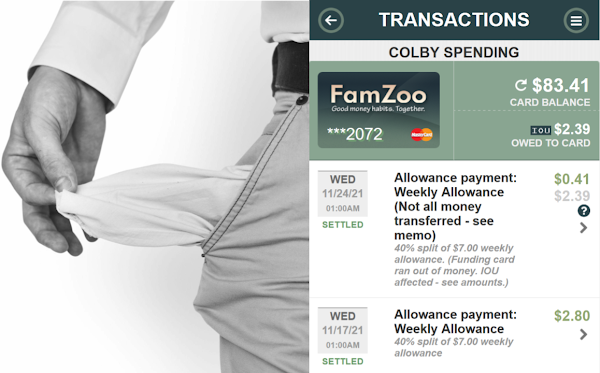
No worries. We’ve got your kid’s back. No need for you to remember your missed payments or record them elsewhere. FamZoo automatically tracks all shortfalls in parent payments — like allowance, chore rewards, interest, reimbursements, etc.

Like this? Please share it!

on
LEAVE A COMMENT!

THE Right Way For Kids To Earn Their Keep

Child washing FamZoo car

Kim B. sparked the hot discussion in the parent community this month with this question:

“I’m curious how your kids earn money. I feel like dishes, bathrooms, etc. are just part of living here, so I don’t want to pay them for it. But I’m struggling to find ways for them to earn money.”

Scores of parents weighed in with a diverse set of ideas.

Like this? Please share it!

on
LEAVE A COMMENT!

29 Tips for Teaching Your Kids to Stack Benjamins from Joe, Tai, Len, and Bill

Stacking Benjamins Family Finance Panel

Your kids know how to stack blocks, but do they know how to stack bills? How about 100 dollar bills? You know, the “Benjamins.”

They will if you listen to last Friday’s episode of the popular personal finance podcast Stacking Benjamins. The host, Joe Saul-Sehy, invited me to join fellow panelists Len Penzo and Tai McNeely in a lively round-table discussion on teaching kids good money habits. Joe plucked a range of topics from three recent articles.

Here’s an outline of the discussion with the 29 key points and tips. Check out the timeline if you want to jump right to your favorite spots in the podcast:

Like this? Please share it!

on
25 COMMENTS

Boost Your Kid's Money IQ with a Simple Spreadsheet

Sample Virtual Family Bank Spreadsheet

Let’s face it. Your kid’s piggy bank isn’t cutting it any more.

Sure, it was a fine first introduction to the most rudimentary concepts of money, but your kid is a smart cookie. Basic lessons learned.

So when are you going to take your kid’s money IQ to the next level? Your youngster is perfectly capable of grasping the following and more:

  • How bank accounts work.
  • How to track income and spending as numbers instead of coins.
  • How to avoid costly debt.
  • How to put money to work with compound interest.
  • How to allocate money to specific financial goals.

That sounds like a daunting parental task, but it doesn’t have to be.

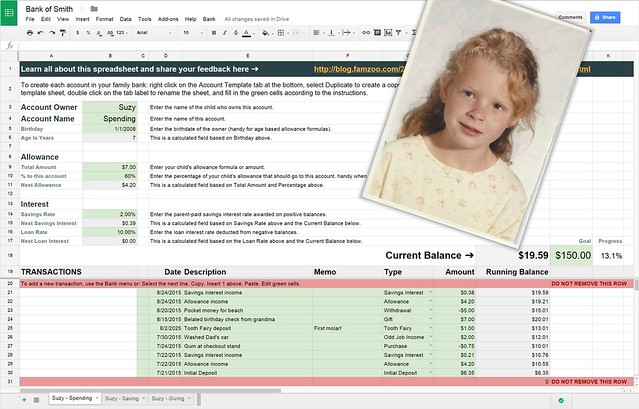
You can do it all with a simple spreadsheet. That’s how I started out with my kids, and I’m not alone. The wildly popular financial blogger Mr. Money Mustache is doing the same. He’s using his “Bank of Mr. Money Mustache” spreadsheet to teach his young son about money too.

Like this? Please share it!

on
LEAVE A COMMENT!

5 Ways to Mess Up Allowance So Your Kids Will Never Be Stacking Benjamins

Are you talking to your kids about money?

Joe Saul-Sehy hosts one of the most popular podcasts in the personal finance space. It’s called Stacking Benjamins, and it’s been at the top of my Stitcher favorites list for weeks now. Joe and his co-hosts magically transform normally bland finance and investing topics into chuckle-worthy entertainment. That’s no small feat. When was the last time you caught yourself guffawing over qualified retirement annuities? Yeah, never.

Needless to say, I’m a huge Stacking Benjamins fan. So, when Joe emailed me a couple weeks ago to be on the show, I was beyond thrilled.

As preparation for the show, Joe asked me to think about “horrible ways to deploy allowance.” I jotted down 5 favorites that sprung to mind. Here’s my list (accompanied by some handy justifications for parents who are determined to stay the course):

Like this? Please share it!

on
LEAVE A COMMENT!

Is Your 6 Year Old Saving for College Yet?

Your 6 Year Old Can Start Saving for College Now!

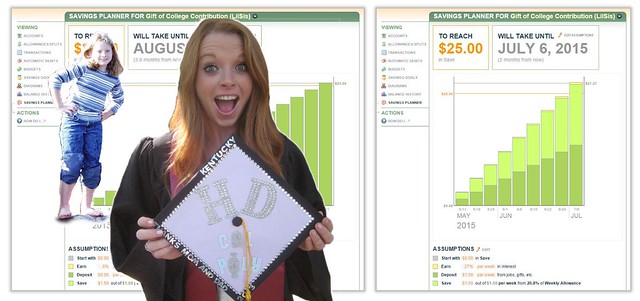
How in the world can a 6 year old making in the neighborhood of $6 a week contribute meaningfully to a college savings fund? Easy. A “micro-savings” card, a split, and a Gift Of College account will do the trick.

Like this? Please share it!

on
LEAVE A COMMENT!

10 Allowance Questions Parents Love to Debate. Join the Chat!

Why allowance is so hotly debated among parents.

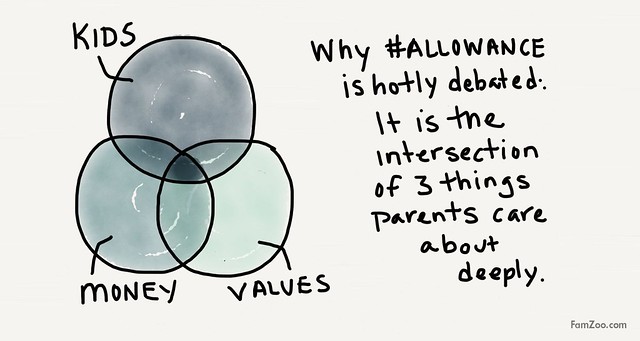
Want to spark an animated debate? Just broach the topic of allowance in a room full of parents. Allowance is one of those hot button words that never fails to elicit passionate opinions. That’s because it stands at the volatile intersection of three things parents care deeply about: money, kids, and values.

So we’re bringing parents from across the twittersphere together into one big virtual room to really stir things up! FamZoo and The Centsables are hosting an #Allowance chat on Twitter to mark the final week of National Financial Literacy Month. Join us and a tweet-load of other passionate parents on Tuesday, April 28th at 9am Pacific / noon Eastern time.

We’ll be discussing the following 10 classic questions about allowance:

Like this? Please share it!

on
10 COMMENTS

7 Practical Tips for Raising Money Smart Kids

Doh! Cracked smart phone. Can you say "emergency fund?"

What are my favorite practical tips for raising money savvy kids? Personal finance writer Karen Cordaway asked me that very question earlier this month. She was putting together a family finance piece for U.S. News that just came out today (4 Fun Ways to Teach Your Kids About Money). It features two of my seven favorites: budget-based allowances and parent-financed loans.

Here’s the full list:

Like this? Please share it!

on
LEAVE A COMMENT!

Positively Parenting and Personal Finance for Kids

Positively Parenting Interview: Teaching Kids Good Money Habits

Roxanne Lochridge is a “Mama” to 3 youngins, a positive parenting evangelist, and a “family scientist.” In a recent interview, Roxanne grilled me on the following topics:

Want to know the answers? You can listen to the interview here or click on the links above to jump right to the answer in the transcript below.

Like this? Please share it!

on
2 COMMENTS

Experts Answer Your Allowance Questions: Family Finance Picks #74

Allowance FAQThis week’s picks feature classic allowance Q&A, pearls of money wisdom from mom and dad, and a tough question for parents of sporty kids from Pete the Planner.

Like this? Please share it!

on
3 COMMENTS

How Much Allowance Should You Pay Your Teenager?

How much allowance should I pay my teen?I bumped into an old friend this week at Starbucks, and he hit me with one of the all-time classic teen parenting questions:

Bill, how much allowance should I give my teenage son?

The short unhelpful answer: “it depends” — of course.

A longer, more helpful response? Here’s what I would suggest when it comes to allowance for a teen. (Note: I’m assuming it’s during the school year and your teen isn’t holding down an outside job. I’d recommend a job during the summer if possible and adjusting things accordingly):

  • Decide on the rough categories of things you want your teen to be in charge of buying — weekday lunches? clothing? entertainment? I’d try to keep it pretty simple. Don’t boil the ocean here. If you make it too complicated, you’ll struggle to consistently follow through.
  • Throw in a small amount for “random wants” — basically pocket change that your teen can blow on stupid stuff or, if motivated, squirrel away each week to save for that special item. Having to delay gratification and go through the extended act of saving is really key here. (See the famous marshmallow experiment.)
  • Have your teen propose a simple high level budget for the above. Review it together and revise until it’s acceptable.
  • Base your allowance amount on that budget.

The bottom line: comparing absolute allowance amounts with peers is pretty much meaningless. Families have wildly divergent expectations about what expenses their kids are responsible for covering and what constitutes a wise purchase given each family’s unique financial situation, money values, etc. That’s why I like the “budget-based-allowance” approach vs. the “but Johnny and Suzy get $X” whine-fest. Logical. Easy to explain. Easy to defend. Plus, when teens help come up with the budget, they feel ownership. They’re bought in. You’re virtually guaranteed to have less complaining and begging downstream in my experience.

Sometimes, it’s helpful to keep a few separate allowance buckets. For example, I had a separate use-it-or-lose it clothing allowance arrangement with my daughter. She couldn’t use clothing money for other stuff, but she could apply her entertainment budget to clothing if she wanted to. I also made her clothing allowance annual instead of monthly or weekly. I wanted her to wrestle with managing a large sum of money over an extended period of time. Experiment a bit, and try whatever tweaks make sense for your teens and family situation. Remember, you can always fine tune things over time, so don’t over analyze it.

Prom Can Take a Big Bite Out of That Clothing Budget!

Another thought: I’ve made several loans to the teens over the years for big ticket “needs” like a laptop. In the laptop case, the loan amount is for the delta between the most basic model and whatever fancy-pants, high end model they think they “absolutely must have.” I “garnish” their allowance to pay it back over a year or so. That way, they really appreciate how much those things cost as they see the payments going out each week and have to cut back on their other spending. The added bonus: they invariably take waaay better care of the things they buy that way. Again, it’s all about ownership and shared skin in the game.

Track Loan Repayments From Your Kids

A parting thought: for teens and college kids, prepaid cards are a really good option. I’ve been using prepaid cards with my 16 year old son for the last several months, and I’ve been very pleased with the results. There’s no worry about running up a debt like with a credit card. Prepaid cards are minimal hassle to get and low commitment relative to a full fledged checking account at a bank. All good things when it comes to dealing with the combustible mixture frontal-lobe challenged teens and money.

I’ll leave you with a list of teen prepaid cards to consider:

Like this? Please share it!

on
2 COMMENTS

Allowances! Modifying Behavior with Money

This is a guest post by FamZoo dad, Matt Fisher. Matt describes how he has customized the account, allowance, and chore settings in his virtual family bank to meet his family’s needs and match their values.


The Bank of Fisher on FamZooIf your household is anything like mine, various attempts at getting your kids to participate in household chores through allowances have been futile. For starters, I rarely have cash on hand and when I do, it’s usually 20’s spit out by the ATM, which forces me to keep mental track of change owed. I also have trouble providing consistent “dollar values” to chores and tracking their completion, and to further complicate it, I don’t want the kids to spend all their money on Slurpees and Xbox games. (Well, okay, spending it on CoD titles is actually ok with me!) I’d really like them to get a sense of working towards a goal and learning some financial responsibility.

I’m an avid technologist (I’m one of those guys who was on the Internet before the WWW existed) so like so many other aspects of complicated modern life, I figured software could help. With a little Googling, I found a web application call FamZoo.com and decided to give it a whirl. Here are my thoughts on FamZoo and how I’ve set it for my family but don’t interpret this as a formal review — I make no attempt to be complete, objective, or compare to other software.

Setting Up Your Virtual Family Bank

FamZoo, which I subconsciously refer to as Family Zoo (although their url is actually famzoo.com) is a web application that allows families to create allowance and savings plans that are as complicated or simple as they’d like. It allows kids to track what they’re owed in allowance, for all the times parents never actually have cash on hand. Very importantly too though, it allows you to create a checklist of chores with associated payments and deductions, so the kids can get credited for doing their chore and debited if they don’t. Additionally, it allows me to create multiple target accounts of money for them, such as free cash, savings, charitable donations, etc and split their allowance into those accounts to enforce savings. This allows me to enforce traditional methods such as “3 Jars” and the “50/30/20” rules that are suggested all over the Internet.

You can also define multiple income streams for the kids, which I took advantage of to set up a fixed weekly lunch allowance that goes straight into their lunch account. When setting up incomes, you have your choice of methods to use, and it provides a few calculators for common methods. For example, enter your kids’ birth dates, and FamZoo will automatically do the “buck a week per year of age” approach for you. So in net, you can define multiple inputs, and multiple outputs, each with separate rules — this is great flexibility that I took advantage of.

Some advanced features I appreciate include:

  • the ability to control recurring chores,
  • automatically add interest on a weekly, monthly or yearly basis,
  • create targeted savings plans for goals (ie, new cellphone),
  • perform automatic matching of contributions, and
  • the ability to let the kids credit/debit/transfer between accounts.

A note of caution: letting the kids control their own credits and debits opens Pandora’s box! A transaction audit log is provided, but in just 2 minutes my awesomely fast clicking son generated enough confusing unearned transactions that I had to go back and delete them. I’ve included more detail about this issue at the end of the post.

It quickly became apparent that the two most core concepts were: how to structure the accounts, and how to structure the corresponding chore checklists. For purposes of simplicity, and avoiding World War III, I’m keeping both structures identical for both kids.

This is what our account structure looks like:

Bank of Fisher Account Structure

The key goals here are:

  1. set aside their lunch money specifically for that, and
  2. enforce strong savings concepts, and social responsibility.

Emphasizing Giving and Saving with Splits

I’m very proud of our household culture of giving (DD’s 11 year birthday gift request was donations to her favorite non-profit), and I like that FamZoo defaults this Charitable Giving category in. All of the categories are editable, by the way. In fact, pretty much everything you see in the application can be changed and customized.

The kids’ income is provided in two manners, and FamZoo makes a handy diagram that shows the flows:

Bank of Fisher Income Diagram

Their lunch “income” is routed directly into their lunch account. As a description for this account, I added a note that they can keep any lunch money if they make and pack their own lunch, but not if they skip lunch at school. This was a little motivator I decided to use, as opposed to making it a “chore”. Kids don’t like chores.

Their weekly allowance, however, is split across the rest of the accounts to enforce best practices, as such:

Bank of Fisher Allowance Splits to Emphasize Giving and Saving

This is basically a kid friendly modification of the 50/30/20 rules popular with some adults.

I feel like this is good structuring. The kids are pushed into saving a healthy amount of their money, but the majority of it is still in a general account that they can spend at will (much more generously than they’ll experience as adults!) I really like the ability to enforce these splits. While teaching the concept of money and earning is important, I think it’s really important to our economy to reinforce the concept of saving cash.

Chores With a Light Touch: Focusing on Opportunities

The chore management is just as important to me, though. We’ve never had a strongly regulated household for a variety of reasons, including less disciplined parenting than we would have liked as well as other really legitimate reasons. Therefore, I didn’t want to take too heavy a hand on chores. Nobody likes chores, and the more intelligent the kid, the more challenging it is to motivate them with menial work. I do want to leverage the “automatically make or lose money” capability of FamZoo, but not for everything. Plus, using the automatic credit/debit feature means interacting with FamZoo every time a chore is done, or risk automatically losing that pay.

With this in mind, I decided I do want a few things to be punched off every day, but that the majority of chores and behavior modifications should be treated more as opportunity, not requirement. So, I built a system of fixed allowance each week using the age method. This is a common suggestion on how much allowance to give, and the site will automatically calculate it for you based on your kid’s age.

Chores are scheduled on a regular basis, and include a credit and a debit. I don’t structure the credits and debits the same though. When the chore is completed and they log in and tick the box, that amount flows into their accounts according to the weekly allowance split. In other words, chore credits are automatically divided between general spending, long term savings, short term savings, and charity. A chore debit, however, is automatically incurred the day after an uncompleted chore is assigned, and comes directly from the child’s general spending account. In other words, the kids automatically lose money for not doing chores, and they lose directly from where it hurts — their spending. You could debit multiple accounts via splits as well, but I predict that the kids will view the enforced savings negatively, so deducting from there doesn’t really have much impact in terms of behavior modification. FamZoo does a great job of letting you decide which account, or which split method (you can define multiple split methods if you’d like) to choose when building a credit or a debit.

Gamification Meets Chores: The Regular, Super, and Ultra Bonus

I have only a few chores — small, daily, easily accomplished things that will get them going and get them motivated. Everything else is either a bonus, or a penalty. Penalties are straightforward — behave poorly in some manner, and lose money directly from your general spending. Bonuses are structured in three ways:

  • A Regular Bonus which is a small amount of money that’s split.
  • A Super Bonus is a larger dollar amount that goes directly into their spending account.
  • An Ultra Bonus is geared at the toughest behavior modification, is high dollar, and goes directly into spending.

Yes, I’m trying to make this look and feel like a video game.

The actual checklist looks like this:

Bank of Fisher Chore and Bonus Chart

I have additional bonuses for things like:

  • Eating a salad as a meal
  • Skipping dessert
  • Spending a day without electronics (This one is high dollar!!)

The Kids Will Be Paying for More

Some of these dollar amounts may look unreasonably high, but remember, I’m trying to create some serious behavior modification here, and I do enforce savings. Part of all this plan is that the kids are going to start paying for things I’ve traditionally paid for out of pocket, such as their cell phones, ongoing video game charges, riding lessons, electronics etc. With that considered I don’t think it’s unreasonable.

Day 1: Introducing FamZoo to the Family

The kids reacted very well to the “few chores, but many potential bonuses” philosophy. At first DD was very glum when I started showing her the site, but when she realized that she only got penalized for a few basic chores, and the rest was all upside, she cheered right up! (Heh, I didn’t mention all the Metric 2 comp and mandatory cross-product goals yet...no wait, that’s MY job.)

DS reacted well also, agreeing that the few chores I did ask each day were pretty basic and easy. The chores were simply:

  • don’t leave clothing lying around,
  • walk a dog every day,
  • take out the trash.

Easy peasy, and that was the goal.

Reported a defect: First of all, there’s a defect in changing chores from repeating chores to non-repeating. Basically it won’t work, and you’ll have to delete the repeating chores and key it back in. I already notified the FamZoo development group, and like a true software startup, one of the developers responded within an hour, on a Sunday night of a holiday weekend. Ah, startups, how I love to miss thee.

Day 2: Working So Far

Today I logged in as an adult and deleted the automatic debits that occurred, since I wanted to give the kids a warm in period . By reminding them gently through the course of the day that they did have some chores to do, and that there were some big bonuses available, I got them to pick up laundry, take out trash and recycles, do dishes, and even spend a couple hours cleaning the house with me. DS even emptied all the trash cans and took the trash to the curb, willingly, cheerfully, quickly, for possibly the first time ever. His best friend was over all day for a lan party, which definitely had him in better moods though, so I can’t tell how much was the incentive plan, and how much was having his friend over.

A Warning About the Child Permissions Setting

As mentioned earlier on, I discovered another aspect of the software, which prompted me to change some settings. You can give the kids the ability to credit, debit and transfer funds between accounts themselves. This actually works as designed; if you check that box from within an account setting they can indeed add and remove funds, and transfer funds. The glitch is that they can literally add $500 to an account if they wish. You have the option of creating email or text based alerts (which I did to confirm operation), but this essentially gives them a complete backdoor to gaming it. Less clever kids will do something like add 500 dollars — easily detected through basic auditing or notifications. Clever kids like mine however, will quickly learn that adding a few bucks here or there, justifying it with a “oh remember I did this but forgot to log in and check it off” will quickly spam the human auditor (Mom or Dad) and a-skimming they will go.

Clearing the Child Permissions check box in the account settings will prevent this possibility, but unfortunately also prevents them from transferring funds between accounts. I’m fine with this, as I really want them obsessing more about earning the funds than re-allocating them since I’ve already defined their allocation splits for them, and when they do want to, say, move a bunch from general spending into charity or long-term savings, I look forward to the conversation

I think a good future design, however, would be to separate transfer permission from the credit/debit permission with the requirement that the parent be able to designate to-and-from relationships — this would also have to be many-to-many, so that I could allow transfers from savings or general spending into long-term savings. I think it would also be a creative design to allow credits and debits to be request based. Rather than notifying that the action occurred: FamZoo would send an email or create a message queue in the interface notifying the parent that the child requested to credit or debit. The parent could permit the action from the message queue in the UI or by responding to email/text alerts.

I don’t like the idea of my kids getting to gunk up the transaction log. Please note this is a very real risk. My son, within about 45 settings of logging in, had rapidly created a complex set of transactions that I actually had difficulty reviewing and reversing. But then, you know my boy, he’s an intelligent and evil as his old man... That is, of course, all hear-say!

A Few Other Caveats

The kids also can’t “print a check out” like other apps (that let them print a check to be cashed by Mum or Dad, and automatically debit the system). I’m fine with that too — again, I’m really trying to encourage focus on the earning and the behavior modification.

Another glitch I found is that chores without an associated due date (which are the majority of mine) do appropriately appear as having no due date, but they disappear when punched off and can’t be reused. In other words, they’re still temporal, despite not being assigned to a specific day. DD had punched a bonus yesterday that she wasn’t able to punch today because it was gone. The solution to that was to change all the bonuses from “No Due Date” to a daily recurring, so that they showed up every day. Since these are bonuses, with no penalties for missing them, the fact that they expire every day have no bearing.

Final Thoughts

I would love to see some more behavioral modification features like bonuses and “constants” included in FamZoo. It’s already very feature rich, and I think it’s prime for extension into other clever areas. This is, in fact, a piece of software I would love to work on myself. It’s fun. It’s well designed and executed to date, but I can already identify meaningful ways for it to grow.


This was a guest post by FamZoo dad, Matt Fisher.

Like this? Please share it!

on
LEAVE A COMMENT!

Do Online Allowance Sites Impede Meaningful Money Talks With Kids? Family Finance Picks #68

Allowance On Auto Pilot. Good or Bad?In her recent MintFamily article Allowance on Autopilot, Beth Kobliner discourages readers from using online allowance sites. After declaring that FamZoo is nothing more than a “glorified gold star chart” (I guess she missed the automated compound interest, splitting between accounts, matching contributions, savings planner, expense tracking, loan tracking, and budgeting tools to name a few items), Beth delivers this bottom line assessment:

My main concern: Allowance sites can be an impediment to money talks, rather than a way to facilitate those conversations. Why talk about saving for a goal or the family budget when you can just automate your kid’s weekly allowance?

Hmmm — that’s odd. Our design goal has always been to increase those quality conversations and boost fiscal awareness, while automating away much of the tedium that causes many parents to fall off the chore/allowance wagon after just a few weeks.

Beth is a well known personal finance journalist and a member of the President’s Advisory Council on Financial Capability, so I’m inclined to take her analysis seriously. I wondered whether Beth’s harsh judgement was based on personal experience with an online allowance site, and, if so, which one? However, in re-reading the article, I noticed the following tell-tale lead-in to paragraph three:

Having never used an allowance website with my kids...

Hmmm.

OK, so we’re left wondering how Beth came to the conclusion that online allowance trackers discourage meaningful money talks with kids. Pure gut feeling? I’ve tried reaching out to Beth on numerous occasions including just last week on her Facebook post about the article — offering to walk her through our product personally. So far, no response, but it remains an open invitation.

A comment on Beth’s article captures the perplexing nature of her assessment:

I agree about the importance of financial education for our children and I am grateful that you would write to try and increase the awareness. But I think this article and the article about old school allowance are lacking in helping any become more financially educated. In old school allowance it seems you tell a story of how it became too hard to track so you gave up trying to teach about financial education when it became the most important (teenage years). And then this post you discount the tools that allow it to be easy enough to track. We have been using an online tracker for a while now and it has been the best thing for our children and my house has never been so clean. But I do not use a traditional allowance system, the online system allows me and my children to track their financial decisions.

In the same vein, when I asked FamZoo families on our Facebook page whether FamZoo is an impediment to money talks with kids (see post), here’s the feedback we received:

Anne E: We’re recent adoptees of this online allowance process. Truth is, I was always of the view that allowance is kind of dumb. Our children do chores and help out around the house because that’s the right thing to do. We started out with Famzoo so they could learn budgeting and responsibilty with their money. They have tasks or chores equal in value to their weekly allowance. If they don’t do their tasks, they get that amount deducted from their allowance. Guess what this has done? It has them working harder! They now associate their work with money. For our family, it has been helpful and far from an impediment.
Andrew P: That is a shockingly poor article — firstly, she openly admits to not having used any of the sites, then quickly progresses to discussing the pros and cons — on what basis? Secondly, she freely admits they are a ‘cash’ using family. That is admirable, and maybe follows conventional wisdom, but we are increasingly moving towards a cash-free society. It is far better that our kids get used to dealing with money as a ‘cyber’ currency now than have them struggling with the discipline required in 10 yrs time. As far as meaningful discussions with our kids, I fail to see how FamZoo is an impediment. Our family has had many conversations about saving vs spending, benefits of compound interest over time, not rushing into purchase decisions, etc. FamZoo helps in this regard as the kids have their own login and can see their savings grow. So Beth — you can keep your cash methods — my family are sticking with FamZoo.
Shawna C: I just opened a trial FamZoo account this week and explained a bit about the idea of savings goals and compound interest to my 6-year-old tonight. I also set up a chore list for each kid, but it’s not coupled to the allowance so they can’t say, “I don’t need money this week so I’m not going to bother with my chores.” So far, so good with Famzoo!
Denise W: Well, she has not seen my FamZoo account then for sure. FamZoo and watching your money is talked about almost daily in my household.
Melissa K: I have found FamZoo to be a huge asset when it comes to teaching my 11 and 13 year old boys about money! We incorporate a lot of Dave Ramsey’s philosophies as well. We are not creating an “entitlement” culture, we are creating a family that understands that attention to responsibilities and a strong work ethic has positive results. The banking aspect of this site has resulted in a greater desire to save and a true sense of financial empowerment.

Now, these are our fans, so they’re admittedly biased. That said, their responses are based on actual experiences.

I welcome dissenting opinions from those who have had different experiences with online allowance and chore tracking sites — particularly FamZoo. Honest, thoughtful criticism helps us refine our offering and deliver a better service, so don’t hesitate to contact us.

In any case, if you scratch beneath the surface, you’ll find that we offer far more than a “glorified gold star chart.” More importantly, by putting the tedium of your kid’s money management on autopilot, we keep the meaningful money talks front and center week in and week out.

MintFamily with Beth Kobliner: Allowance on Autopilot

The article that sparked the commentary above.

Discuss on FaceBook.

A Virtual Bank for Kids’ Allowance

The recent public radio Marketplace segment in which Suzanne Skyvara describes how she teaches her kids good money habits with FamZoo, and Beth Kobkliner expresses her skepticism.

MintFamily with Beth Kobliner: Allowance, ‘Modern Family’ and My Family

An earlier article by Beth that covers her family’s stuggles with allowance (“With three kids, my husband and I still haven’t mastered the art of giving them allowance in a timely fashion.”)

Like this? Please share it!

on
LEAVE A COMMENT!

Allowances Don't Spoil Kids, Parents Do. Family Finance Picks #67

Last week, Dan Kadlec invited me to chime in on the “allowance debate” for his article in TIME Business & Money:Kids and Allowance: The Debate that Divides Us. I was honored to be included alongside some of the most prominent names in personal finance (Suze Orman, Dave Ramsey, Jean Chatzky, Janet Bodnar), and I was relieved to be grouped in the “thoughtful” corner (I can just see my kids rolling their eyes now).

Here’s my stance on the allowance debate — most of which Dan was nice enough to include in the article verbatim:

FamZoo Featured in TIME Business & MoneyI find the allowance debate to be a diversion. To me, the far more crucial thing is practice — early and often. I think it’s critical for parents to make sure their kids get regular hands-on experience making real spending, saving, and giving decisions with a modest, constrained supply of their own income. I don’t think the specific source of that income (unconditional allowance, chores, outside jobs, or a hybrid thereof) is hugely important — as long as it’s thoughtful, consistent, clearly communicated, and in line with the family’s values.
Furthermore, the appropriate source and amount of that income varies with age. As kids mature, they can manage spending for more than just little occasional “wants” and start tackling budgeting and expense tracking for specific needs — like clothing. Over time, they can also be expected to kick in more and more income on their own from outside work.
My bottom-line advice to parents: don’t let agonizing over the allowance vs. chores debate get in the way of getting your kids started with hands-on money practice — pick an approach, get started, and tweak it over time.

Beyond the compliment of being included, I was particularly pleased to see Dan cast a critical eye on the Mandell research that purportedly shows an inverse relationship between receiving an allowance and developing financial aptitude. The less discerning journalists tend to just run with a link-bait headline like “Allowance Does More Harm Than Good” and then couple it with a fluff piece sans any meaningful analysis. A more accurate headline that more closely matched the findings would really read something like: “Thoughtlessly forking over an allowance with no discussion or guidance probably won’t teach your kid good money habits.” No, duh.

My feeling: Allowance isn’t the problem, but parents might be. Allowance is just one simple tool (among many) that parents have at their disposal. If parents are thoughtfully delivering a modest allowance as a way to give their kids regular practice managing a constrained financial resource (also know as operating within a budget), I can’t fathom how that would inhibit the development of their financial aptitude. If the “research” shows otherwise, I’m inclined to think there are other factors at play that are skewing the results (see section 2 of this post for more thoughts on such studies).

Allowances Don't Spoil Kids. Parents Do.

Kids and Allowance: The Debate that Divides Us

Dan Kadlec covers all the “expert” (present company excluded!) angles on the ever polarizing allowance-for-kids debate: no allowance ever vs. pay for chores only vs. allowance as a budgeting tool.

Discuss on FaceBook.

Like this? Please share it!

on
2 COMMENTS

Your Kid's Allowance Isn't Just About Spending: Family Finance Picks #66

Typically, when parents hear “allowance”, parents think “spending”.

In the worst case, allowances fuel more spending. Thoughtless parents unconditionally shower bloated sums on their entitled kids who rush out to satisfy their “wants” on the latest consumer-driven fads. Instant gratification. Profligate spending. Ugh.

In the best case, allowances constrain spending. Modest sums are saved week after week by patient kids who deliberate over their eventual purchases, weighing the pros and cons of each. Delayed gratification. Disciplined spending. Good stuff!

But there’s another word I wish allowance would more readily evoke: “giving”. Allowance can be a great tool for introducing your kids to philanthropy, and cementing a lifelong habit of charitable giving. Here’s how you can get started today:

Pick a giving goal. Sit down with your child and pick a charitable giving goal that matches her interests and means. Need some ideas?

Pick a Giving Goal
  • I’ve written about DonorsChoose before here. Your kids can help students in need by helping to fund projects posted by public school teachers across America.
  • Lots of FamZoo families recommend the microfinance non-profit Kiva. Individuals can lend as little as $25 to help create opportunity around the world.
  • Our kids recently pooled their charitable account funds and made a donation to Sandy storm victims via the Red Cross.
  • In Mark Hurst’s 2013 Gift Guide, I read about a more personal way to reach out to Sandy victims through the organization Family-to-Family.

Want more ideas? Check out pick #1 below.

Make a fund-raising plan. Help your child work out a gameplan to raise the funds for the donation. Here are a few ideas to mix ’n match: set aside a portion of allowance, tackle some odd jobs, hold a fund-raising event, or convince mom or dad to kick in some matching funds.

Make a Fundraising Plan

Track progress. Review progress each week with your child. Fine tune the plan along the way if things are getting off track.

Track Fundraising Progress

Create a memorable giving moment. When your child donates her own hard-earned money to a cause, it invariably creates a strong sense of fulfillment and pride. It’s a powerful moment. Reinforce it. See picks #2 and #3 below for two recent examples of memorable giving stories involving young philanthropists.

#GivingTuesday: Ideas for Families

There are lots of neat family philanthropy ideas in this article that came out as part of the #GivingTuesday campaign this year. Here’s what that campaign is all about:

#GivingTuesday™ is a campaign to create a national day of giving at the start of the annual holiday season. It celebrates and encourages charitable activities that support nonprofit organizations.

Related FamZoo Activity: Make a family charitable checklist for 2013.
Discuss on FaceBook.

Rochester Girl Spends Allowance on Statue for Vandalized Museum Garden

I love this story about a 4th grade girl’s generosity with her allowance.

Discuss on FaceBook.

Put the ‘Giving’ Back in Thanksgiving

A wonderful Thanksgiving story from Neale Godfrey showing how an allowance empowers a child to not only spend, but give.

Related FamZoo Activity: Split your child’s allowance as suggested by Neale.
Discuss on FaceBook.

When used properly, allowance can be a great tool for helping kids make a habit out of both disciplined spending and thoughtful giving.

Good luck and happy giving!

We’re constantly scouring the Internet looking for articles related to family finances and teaching kids good personal finance habits. You can visit our ever growing list of family finance bookmarks here. We’re up to 3,024 now!

Like this? Please share it!