Showing posts with label Review. Show all posts
on | LEAVE A COMMENT!

One Year Into Using FamZoo: An Honest Review From Regular Parents

I opened up iTunes today to perform my periodic check on FamZoo reviews.

My mind was blown by “ReggaeGeek” — a dad with two kids 12 and 14.

He left the most epic review ever. So epic in fact, that I couldn’t include the whole thing on our kind words page without crowding out the others. So, I’m sharing the full review text here.

Sure, it’s highly complimentary, so you could dismiss this post as a shameless self-promotion. But ReggaeGeek’s review is also comprehensive, instructive, real, and — for us — insanely motivating.

ReggaeGeek’s personal FamZoo story describes precisely the positive outcome we’re striving to facilitate. Reading it motivates us to double down and work harder to replicate his experience in more and more families.

And, no, I have no idea who ReggaeGeek is. That’s what makes his story particularly gratifying.

So, if you want to see how some “regular parents” used FamZoo to transform their kids’ money behaviors in ways that were nothing short of “incredible” (ReggaeGeek’s words, not mine), read on. There are some priceless tips in here that you may want to adopt in your own household.

Without further ado, here’s ReggaeGeek’s review extracted verbatim from iTunes (aside from a little formatting and spellcheck):

on | LEAVE A COMMENT!

Smart Money, Smart Kids: Brilliant Blueprint for Teaching Your Kids Good Money Habits

Smart Money, Smart Kids: An brilliant blueprint for teaching your kids good money habits.

As the founder of a money management site for families, I’ve been studying and implementing strategies for teaching kids good money habits full time since 2006 (and as a father of 5, I’ve been dabbling in the area long before then). Suffice it to say, I’ve read just about everything written on the topic of kids and money. After reading Smart Money, Smart Kids by Dave Ramsey and his daughter Rachel Cruze, I can confidently say it’s now among the top two on my recommended reading list for parents (the other being The First National Bank of Dad by David Owen).

Smart Money Smart Kids is wonderfully practical and thoughtful. Its concepts are conveyed through real stories that keep the text engaging and memorable. Even if you don’t consider yourself a Dave Ramsey devotee (I’ll admit that a few of his stances drive me crazy) or you aren’t coming at this from a Christian perspective, you’ll get a lot of value out of 99% of this book. At minimum, reading the book will force you to systematically think through how you are teaching (or plan to teach) your own kids about money at each stage in their development. I guarantee you’ll find the book helpful if you’re interested in teaching your kids good money habits.

Some of my favorite themes from the book include:

on | 5 COMMENTS

4 Big Things Your Teen Can Save For

Your teen CAN save for a car. Try the 401DAVE plan.

When it comes to big expenses, most of us parents are giving our teens too much credit and too little credit, all at the same time. How so? On the one hand, we’re giving our teens too much credit (in the form of dollars) by covering big ticket items for them — often when we can’t even afford them ourselves. On the other hand, we’re giving our teens too little credit (in terms of respect for their capabilities) by assuming they can’t handle paying for at least a portion of these major expenses on their own.

This dawned on me last week while reading Smart Money, Smart Kids. (Why am I reading the new book by Dave Ramsey and his daughter Rachel Cruze? See the first post in this series here.)

Here are 4 big expenses that your teen is perfectly capable of paying for, despite your assumptions otherwise:

on | 2 COMMENTS

Striking a Balance with Kids and Money

Strike a balance when teaching your kids about money.

The truth is somewhere in between.

That phrase comes to mind a lot while parenting. (If you’ve ever sorted out the claims of two bickering children, you know what I mean.)

It also comes to mind when teaching kids about money.

Spending. Saving.

Limits. Leniency.

It isn’t just one or the other. It’s about balance, and that theme shines strongly in the Spending chapter from the new book Smart Money Smart Kids. (Why am I reading the new book by Dave Ramsey and his daughter Rachel Cruze? See the first post in this series here.) In fact, I was pleasantly surprised to see the theme of balance so prominently represented throughout the book. Why? Let’s be honest, Dave Ramsey has a reputation for being, well,... harsh. But Dave has a real soft spot when it comes to kids. As he puts it:

on | LEAVE A COMMENT!

Connecting the Dots Between Money and Work for Your Kids

Work: It's NOT a Four Letter Word

Where does money come from? That’s a silly question — just ask any little kid and you’ll get the obvious answer:

“It pops out of a machine that my mom visits.”

“It lives on a magical card in my dad’s wallet.”

“It comes from my mom’s iPhone.”

Uh oh...

on | 2 COMMENTS

Setting a Good Money Example for Your Kids: Sufficient? Necessary?

Help your kids learn personal finance through hands-on practice.

“Set a good example!”

That tip inevitably ranks high in the typical Top N list for teaching kids good money habits.

Sure, setting a good example is an excellent thing to do as a parent, but the advice makes me cringe in this case for two reasons: complacency on the one hand and paralysis on the other.

on | 4 COMMENTS

Teaching Kids Good Money Habits the Ramsey Way: Introduction

No two families are exactly alike when it comes to teaching kids about money. It’s one of those parenting topics that can stir some deep emotions, strong convictions, and raging debates. That’s why we’re so careful not to push any specific financial approach or agenda at FamZoo.com. If you have a desire to teach your kids “good” money habits (where you get to define what “good” means), then we’re here for you. We’ll make it more convenient, hands-on, and engaging to translate that desire into sustained action. We give you a big box of helpful tools, and you pick the ones that make the most sense for your family.

Unfortunately, choosing from a big, open toolbox can leave many families a bit stymied. Parents ask us: “Which tools are best for my family? How do I use them and when?” Each family is looking for a money teaching recipe that matches their tastes — something they can pick up and run with immediately. The problem is: how do we figure out what those tastes are? One way is to have a family identify their favorite “money chef” — a personal finance luminary who promotes a specific system or approach. Once we know the desired recipe, it’s easy to suggest the right tools to get the job done.

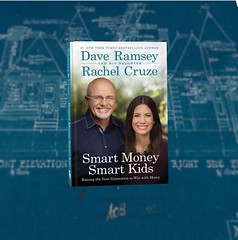
Get started on "Smart Money Smart Kids" by Dave Ramsey and Rachel Cruze

One undeniably popular personal finance icon is Dave Ramsey. Dave has a huge following and has produced several offerings that deal specifically with teaching kids good money habits. In fact, he and his daughter, Rachel Cruze, are weeks away from releasing a new book that pulls all of their youth financial education advice together in one place. It’s called “Smart Money Smart Kids.” I’ve been reading pre-release chapters of the upcoming book. It’s very thoughtful and well written. I’m confident that all parents — even those who don’t count themselves among the Dave Ramsey flock — can find something valuable in the book to apply within their families. At minimum, reading the book will force you to think through how you are teaching (or plan to teach) your own kids about money. That’s useful all in itself. Adapt and apply the ideas you like, ignore the ones you don’t.

Over the next several weeks, I’ll be posting my favorite points from each section of the book. When relevant, I’ll describe how FamZoo can be used to support those concepts.

So, let’s jump in with Dave’s introduction to the book. Here are my favorite nuggets with my take on each:

on | 4 COMMENTS

Cigars? Beer? Try Dad Rules Instead

So your best buddy just became a dad, and you’re looking for that special guy-centric something to commemorate the monumental event. Of course, you could go with one of the classic standbys: a box of cigars, a six-pack of beer, or something else to dull that vague sense of foreboding. Instead, maybe you should try something that will actually help your buddy successfully navigate his new-found responsibility, rather than blunder through it blindly.

Stumped? Puzzle no more. I’ve got just the answer: Treion Muller’s new secrets-of-fatherhood handbook: Dad Rules: A Simple Manual for a Complex Job.

Dad Rule #52

Treion (pronounced “tree-on”) nails the requirements for this tricky genre geared toward an often reluctant audience:

Dad Rules by Treion Muller
  • Blissfully short: It’s 81 quick pearls of wisdom, each of which fit easily on a single page in big type no less.
  • Simple to understand: Each nugget of advice is easily digested. No big words. No fancy concepts — unless you count the occasional pithy quote from some old dead wise person, but those are optional.
  • Room for disagreement: Treion acknowledges that your mileage may vary. He grants you license to skip the rules that you feel don’t apply or that you just plain don’t like. It’s still handy to have them around for reference, though. That way, you can skulk back and adopt them when you realize you were wrong...
  • No required reading order: Skip around. Read one rule here, one rule there. Re-read a handful from time to time. They’re largely independent, and cross-referenced when related.
  • Immediately actionable: That’s the best part. You can read a simple rule, take it to heart, and go make it happen with your kids right away. No assembly required.

FamZoo dads (and moms!) will dig Dad Rules because it shares a number of core principles that FamZoo also holds dear. Here are just a few I jotted down along the way:

  • Every family is different. Pick the “best” practices that work for yours. Both FamZoo and Dad Rules offer a toolbox of potential solutions culled from the experiences of everyday parents, or as Treion puts it, “the combined wisdom of many dads who have faced similar challenges and survived.” Treion echoes the experience I’ve had just within my own family and underscores why we’ve worked so hard to keep FamZoo so flexible: “Each child is different. What works for one may not work for another.”
  • Maintain consistency between your thoughts, words, and actions. One of those pithy quotes Treion passes along is this gem from Gandhi: “Happiness is when what you think, what you say, and what you do are in harmony.” It feels so right and so good when you actually say what you’re truly thinking and, further, when you actually do what you say. You know you should be a good dad. You say you want to be a good dad. Dad Rules helps you do just that. Similarly, in our life skills niche: You know you should teach your child good money habits. You say you want to teach your child good money habits. FamZoo helps you do just that. Following through effectively does indeed bring great happiness.
  • Mastering basic life skills requires practice. In Rule 70, Treion reminds us: “There are some basic skills that every functional human being, including your children, should know how to do. Don’t assume your kids will just learn how to do these things by osmosis.” Yes, it’s so easy to take for granted what we already know — to forget the process that got us to that level of understanding. Don’t leave your kids to struggle through learning the hard way when the stakes are higher. Be an explicit life skills mentor. That’s why the FamZoo tag line is: “Preparing kids for the wild.”

So what are some of the rules? It was tough to choose favorites, but I picked out 5 that really resonated for me:

Rule 44: The answer to, “Dad, can I show you something?” is always, “Yes!”

Taylor on Fixed GearThis question is the precursor to some of the greatest moments in your life. Don’t miss out. And, remember, one of the most valuable things you can give your child is your undivided attention.

Rule 45: If you feel the urge to lecture, stop and think about it first.

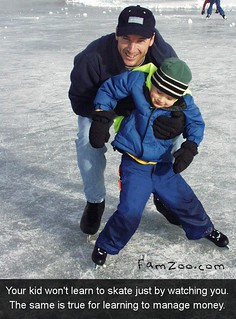
Lose The LectureKids learn by doing, not lecture. ’Nuff said.

Rule 55: Raise children, not clones of you.

Embrace Your Child's DiversityIt’s OK to reinforce your core values, but embrace and encourage your child’s natural diversity along the way.

Rule 68: Establish a healthy dose of family traditions.

P20081127 132Traditions are such a key part of the family fabric. And, I agree with Treion when he says "the best traditions are the ones that involve serving others.”

Rule 70: Make your kids work for their rewards.

Delayed GratificationOwnership. Responsibility. Work ethic. Self-reliance. I love all those concepts. And, I loved Treion’s cautionary comments for this rule:

I call this is the “anti-entitlement” rule. In a world of excess and limitless material possessions, our children are sometimes victims of overindulgence and feelings of entitlement. “I want” and “I get” are often synonymous. They ask, and we give. Beware! This seemingly innocent practice just feeds into an already growing culture of entitlement. If you love your children, make them work for their rewards.

That rounds out my top 5 favorite dad rules. I’m sure you’ll find a bunch that hit home with you and your family. You’ll also undoubtedly find a handful that will give you pause and make you think: “Man, I really need to start doing that with my kids!” I did, and I’m no spring chicken when it comes to the fatherhood gig.

So, if you have a buddy who is taking the plunge into parenthood, grab him a copy. He’ll appreciate it. Who knows? Someday Dad Rules may even unseat beer as the most popular baby shower present for dads. Well, OK, no reason you can’t get him both. I suspect they go pretty well together.

on | LEAVE A COMMENT!

3min Video Review of FamZoo by Family Finance Blogger Kelly Whalen

Family finance blogger, Kelly Whalen, over at The ¢entsible Life reviews FamZoo in this short 3 minute video. Check it out:

PS: If you're feeling a mild sense of déjàvu, you're not imagining things. I first mentioned this review in a March 2nd post, but it was embedded in a much longer video and could only be viewed in a tiny player that was quite challenging to navigate. In the meantime, I've extracted the relevant section of video in a larger format, mixed in some cartoons and screenshots to illustrate Kelly's points, and delivered it through a higher quality player from Vimeo.com. I hope you'll find it to be a more pleasant viewing experience!

PPS: For those who might be interested in producing their own videos like this, the software I'm using is ScreenFlow for the Mac, and I highly recommend it. The groovy music in the intro and the outro is “Bare Feet Bossa” - a royalty free track that I purchased from Loopsound.com.